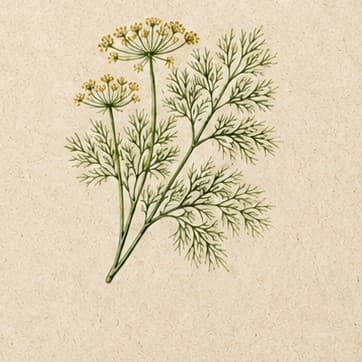
Dill is a fast-growing annual with wispy, blue-green fronds and a distinctive anise-like freshness. Both the leaves (dill weed) and seeds are used in cooking. It is most productive in cool weather and will bolt quickly in heat, so succession planting through the season keeps fresh fronds coming. Fresh dill is best - the flavor diminishes more than most herbs when dried.
The full guide
Dill wilts quickly. Trim cut ends and stand in a jar of water on the counter for up to 2 days. For longer storage, wrap in a damp paper towel and refrigerate - up to a week. Use as soon as possible for best flavor.
Sun
full sun (6+ hours)
Water
moderate - even moisture during establishment, tolerates short dry spells
Lifecycle
annual
Days to maturity
40-60 days from seed to leaf harvest
Container suitable
Yes - grows well in pots
Snip fronds from the outer stems any time the plant is 12+ inches tall. For dill seed, allow flower heads to turn brown and dry on the plant before collecting. Work gently - stems are brittle.
What to harvest
- leaves
- seeds
- flower umbels
Best season
- late spring
- early summer
- fall
Drying
Dill loses significant flavor when dried. If drying: spread fronds on a screen at the lowest possible temperature (under 95°F) or use a food dehydrator. Dry quickly to preserve the most color and flavor. Seeds dry better than leaves - spread harvested seed heads on a screen and let them finish drying for 1-2 weeks.
Storage
Dried dill weed keeps 6 months in a sealed jar. Dill seeds keep 12+ months and are more flavorful dried than the leaves. Freeze fresh fronds for best results in cooked dishes.
Dill is a natural pairing in herb-infused vinegars and pickling brines - variations on the infused-oil method apply here.
- How to Dry Fresh Herbs
A straightforward method for preserving your herb harvest so nothing goes to waste.
For Dill: Dill weed loses a lot in drying. Dry quickly at low temperature, or freeze instead. Dill seeds dry far better than leaves.
beginner1-2 weeks (mostly hands-off)
Flavor profile
Fresh, anise-like, slightly grassy and tangy
Uses
- pickles
- salmon
- cucumber salads
- potato salads
- tzatziki
- eggs
- borscht
- cream sauces
- gravlax
Pairs well with
- salmon
- cucumber
- potatoes
- eggs
- sour cream
- lemon
- mustard
- beets
Traditional uses
- traditionally used across Scandinavian, Eastern European, and Middle Eastern folk traditions as a culinary and aromatic herb
- long valued in folk traditions for its use in digestive cooking
Always worth knowing before you cook with or use any herb regularly.
- If you are pregnant or nursing, talk with your provider before using herbs medicinally.