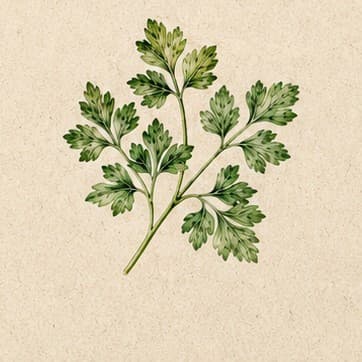
Flat-leaf parsley has more flavor than the curly type and holds up better in cooking. It brightens almost any dish - stirred into sauces at the end, chopped over roasted vegetables, blended into chimichurri or tabbouleh. It is a biennial, producing its best leaf harvest in the first year. A productive plant gives steady harvests all season long.
The full guide
Parsley keeps well refrigerated. Wrap loosely in a barely damp paper towel and store in a sealed bag or container. It holds for 1-2 weeks. For counter storage, trim stems and stand in a jar of water.
Sun
full sun to partial shade
Water
moderate - consistent moisture, mulch to retain
Lifecycle
biennial (usually grown as annual)
Days to maturity
70-90 days from seed
Container suitable
Yes - grows well in pots
Cut outer stems from the base, leaving the inner growth to continue developing. Always cut at the base of the stem, not midway. Harvesting outer stems regularly keeps the plant productive.
What to harvest
- leaves
- stems
Best season
- spring
- summer
- fall
Drying
Parsley loses most of its bright flavor when dried, so fresh is much preferred. If you must dry it, use a food dehydrator at 95°F for the best color retention. Or freeze: chop finely, spread on a sheet tray, freeze until solid, then transfer to a bag.
Storage
Store fresh parsley refrigerated for up to 2 weeks. Frozen parsley keeps for 6 months and works well in cooked dishes.
Parsley pairs well in herb blends - see the drying guide for handling mixed batches.
- How to Dry Fresh Herbs
A straightforward method for preserving your herb harvest so nothing goes to waste.
For Flat-Leaf Parsley: Parsley loses most of its flavor when dried. Freezing is a better option for cooked applications.
beginner1-2 weeks (mostly hands-off)
Flavor profile
Bright, fresh, and grassy with mild bitterness
Uses
- tabbouleh
- chimichurri
- gremolata
- pasta
- soups
- salads
- roasted vegetables
- herb butter
- potato dishes
- eggs
Pairs well with
- garlic
- lemon
- olive oil
- tomatoes
- cucumber
- lamb
- beef
- chickpeas
Traditional uses
- long used as a culinary staple across Mediterranean, Middle Eastern, and European traditions
- traditionally valued as a cleansing kitchen herb and plate garnish
Always worth knowing before you cook with or use any herb regularly.
- If you are pregnant or nursing, talk with your provider before using herbs medicinally in large quantities.