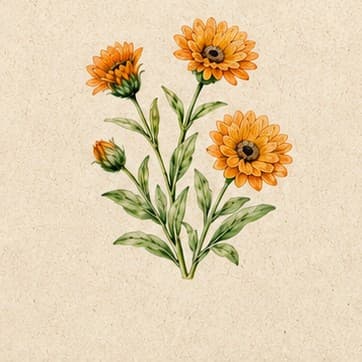
Calendula is a cool-season annual that blooms prolifically from spring through first frost, especially if you keep picking the flowers. The bright petals are edible - they add color to salads, rice, and egg dishes - and the whole dried flower is widely used in herbal skin care preparations and infused oils. Pick often and the plant just keeps going.
The full guide
Calendula flowers wilt within hours of cutting. Use immediately for culinary purposes, or begin drying right away for herbal preparations.
Sun
full sun to partial shade
Water
moderate - even moisture, tolerates some drought
Lifecycle
annual
Days to maturity
45-60 days from seed to first bloom
Container suitable
Yes - grows well in pots
Pick flowers when they are fully open and at their most vibrant. Harvest every 1-2 days during peak bloom. Pinching off spent heads keeps new buds coming. Harvest in the morning.
What to harvest
- flowers
- petals
Best season
- spring
- summer
- fall
Drying
Calendula flowers must be dried thoroughly to avoid mold - the centers hold moisture even when petals feel dry. Spread flower heads face-up on a screen in a warm, well-ventilated spot. Or use a food dehydrator at 95°F. Check the centers after 1-2 weeks; press them firmly - they should feel completely dry, not spongy. Good airflow matters a lot here.
Storage
Store dried calendula in a sealed jar away from light. Properly dried flowers keep for 12 months. The petals should stay bright orange-yellow; fading or browning signals moisture was present.
Calendula is a classic ingredient in infused oils for skin care. See the herb-infused oil guide for the method.
- How to Dry Fresh Herbs
A straightforward method for preserving your herb harvest so nothing goes to waste.
For Calendula: Calendula flowers must dry completely, especially the centers. A dehydrator is reliable here.
beginner1-2 weeks (mostly hands-off) - Herb-Infused Oil
A simple method for capturing herb flavor and fragrance in olive or carrier oil.
For Calendula: Calendula oil is traditionally used in skin care. Use a carrier oil like sweet almond or jojoba and the cold infusion method for best results.
beginner2-4 weeks cold method; 2-3 hours warm method
Flavor profile
Mild, slightly bitter and peppery; petals are mild enough to use as a garnish
Uses
- salads
- rice dishes
- egg dishes (as a saffron substitute for color)
- herb-infused oils
- herbal preparations
Pairs well with
- olive oil
- beeswax (in salve making)
- chamomile
- chickweed
Traditional uses
- traditionally used topically in folk traditions across Europe as a skin-supporting herb
- long valued as a gentle herb for household and body care preparations
- used in folk traditions to support healthy skin
Always worth knowing before you cook with or use any herb regularly.
- If you are pregnant or nursing, talk with your provider before using herbs medicinally.
- Those with sensitivities to plants in the daisy family (Asteraceae) may wish to start with a small amount.