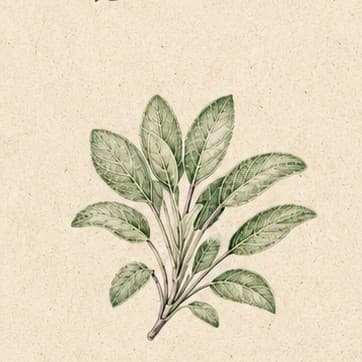
Garden sage is a sturdy perennial with soft, silvery-green leaves that carry a distinctly savory, almost woodsy scent. It pairs especially well with rich foods - butter, sausage, butternut squash, pork - because its flavor cuts through fat beautifully. Fried sage leaves in brown butter are a quick, impressive finish for pasta or gnocchi. Harvest leaves freely through the season to keep the plant bushy.
The full guide
Sage keeps best loosely wrapped in a dry (not wet) paper towel in the refrigerator crisper. It holds for 1-2 weeks. At room temperature, a bunch in a jar of water lasts a few days.
Sun
full sun (6+ hours)
Water
low - drought-tolerant, needs excellent drainage
Lifecycle
perennial
Days to maturity
75-80 days from seed
Container suitable
Yes - grows well in pots
Pick individual leaves or cut 4-6 inch stem tips. Harvest in the morning after dew dries. Take no more than one-third of the plant at a time. Flowers are edible and make a lovely garnish.
What to harvest
- leaves
- flowers
Best season
- spring
- summer
- fall
Drying
Sage dries excellently. Spread leaves or small bunches on a clean screen or hang upside down in a warm, ventilated space. Check after 1-2 weeks - leaves should crumble, not bend. Store whole leaves to preserve oils.
Storage
Dried sage holds up well for 6-12 months in a sealed jar away from heat. Crumble or grind just before using.
Try sage in herb-infused butter or oil - see the infused-oil guide.
- How to Dry Fresh Herbs
A straightforward method for preserving your herb harvest so nothing goes to waste.
For Garden Sage: Sage dries well and the flavor deepens slightly when dried. Good both air-dried and on a screen.
beginner1-2 weeks (mostly hands-off) - Herb-Infused Oil
A simple method for capturing herb flavor and fragrance in olive or carrier oil.
For Garden Sage: Sage oil has a warm, herbal depth. The warm infusion method works well and the result is lovely drizzled over beans or squash.
beginner2-4 weeks cold method; 2-3 hours warm method
Flavor profile
Warm, earthy, musky, and savory with mild camphor notes
Uses
- brown butter pasta
- gnocchi
- pork
- sausage
- butternut squash
- stuffing
- risotto
- bean dishes
- compound butter
Pairs well with
- brown butter
- pork
- butternut squash
- onion
- garlic
- parmesan
- pasta
- beans
Traditional uses
- traditionally valued in European folk and culinary traditions as a warming aromatic herb
- long associated in folk traditions with supporting digestion after rich meals
Always worth knowing before you cook with or use any herb regularly.
- If you are pregnant or nursing, talk with your provider before using herbs medicinally.
- Avoid large medicinal doses during pregnancy.