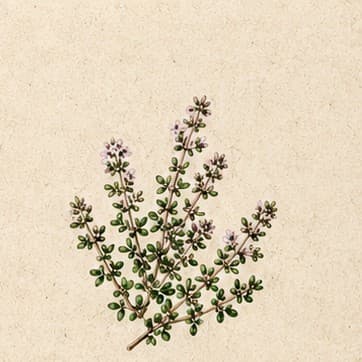
Common thyme is a low-growing perennial that produces tiny leaves packed with aromatic oils. It holds its flavor well during cooking, so it goes in early with braising liquids, stocks, and roasts. Fresh thyme has a brighter edge than dried. A small bunch harvested just before flowering is at peak potency.
The full guide
Wrap fresh thyme loosely in a barely damp paper towel and refrigerate in a bag or container. It keeps for 1-2 weeks. For short-term countertop storage, a small jar of water works too.
Sun
full sun to partial shade
Water
low to moderate - well-drained soil, tolerates dry spells
Lifecycle
perennial
Days to maturity
70-90 days from seed to first harvest
Container suitable
Yes - grows well in pots
Cut 4-5 inch stems before or just as the plant flowers. Avoid cutting more than one-third of the plant at once. The woody base regrows slowly, so harvest from the soft new growth.
What to harvest
- leaves
- stems
- flowers
Best season
- spring
- summer
- fall
Drying
Thyme dries beautifully. Tie small bundles and hang upside down in a warm, airy spot, or spread on a screen away from direct sun. Leaves should be fully dry in 1-2 weeks. Strip from stems and store whole.
Storage
Dried thyme keeps well in a sealed jar for up to a year. Whole dried sprigs retain flavor better than pre-crumbled leaves.
Thyme blends well with other drying herbs - see the drying guide for batch tips.
- How to Dry Fresh Herbs
A straightforward method for preserving your herb harvest so nothing goes to waste.
For Common Thyme: Thyme air-dries beautifully. Small bundles hung upside down keep their savory flavor for months.
beginner1-2 weeks (mostly hands-off) - Herb-Infused Oil
A simple method for capturing herb flavor and fragrance in olive or carrier oil.
For Common Thyme: Thyme infuses nicely into olive oil for cooking and dipping. Dried thyme is safest for oil at room temperature.
beginner2-4 weeks cold method; 2-3 hours warm method
Flavor profile
Earthy, slightly floral and lemony, with warm savory depth
Uses
- roasts
- soups
- stews
- stocks
- eggs
- vegetables
- legumes
- marinades
- herb blends (bouquet garni, herbes de Provence)
Pairs well with
- garlic
- lemon
- rosemary
- bay leaf
- chicken
- mushrooms
- tomatoes
- white beans
Traditional uses
- traditionally used in folk medicine as an aromatic cooking herb across European cultures
- long valued in herbal traditions for its warming properties
Always worth knowing before you cook with or use any herb regularly.
- If you are pregnant or nursing, talk with your provider before using herbs medicinally.