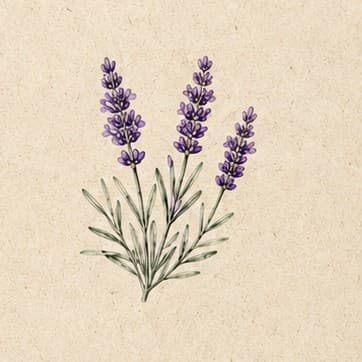
English Lavender
Lavandula angustifolia
Also known as: true lavender, garden lavender, common lavender
The most beloved aromatic herb - floral, calming, and endlessly useful.
From $7.00 / bunch
Order nowEnergetics
Lavender has been part of household and personal care rituals for centuries. The scent alone can shift the feeling in a room.
English lavender is the sweetest-scented variety and the most commonly grown for both culinary and aromatic use. The flowers are harvested in bud stage for the most intense fragrance and the best dried color. Fresh lavender bundles are lovely on their own; dried lavender belongs in sachets, bath salts, baked goods, and shower steamers. This is a long-lived perennial that gets better with every year.
The full guide
Fresh lavender bundles hold their shape for days at room temperature. Stand in an empty jar or vase without water (unlike soft herbs, lavender does not need hydration). Keep out of direct sun to preserve color.
Sun
full sun (6+ hours)
Water
low - drought-tolerant, excellent drainage is essential
Lifecycle
perennial
Days to maturity
First good harvest in year 2; plants improve through year 4
Container suitable
Yes - grows well in pots
Harvest when the buds are colored but not yet fully open - this is when fragrance is strongest. Cut stems long for bundling. In the morning after dew has dried is the best time. Cutting back by one-third after harvest keeps the plant shapely.
What to harvest
- flower buds
- stems
- leaves (sparingly)
Best season
- late spring
- early summer
Drying
Lavender dries easily and retains excellent fragrance. Bundle stems with a rubber band (stems shrink as they dry) and hang upside down in a warm, airy space away from direct sun. Flowers are fully dry in 2-3 weeks. Alternatively, spread on a screen. A food dehydrator at 95-100°F works in 1-2 days.
Storage
Dried lavender holds fragrance for 1-2 years in a sealed container. For culinary use, store buds in a small jar away from light; for sachets and aromatics, tie into small bundles or fill cloth bags.
Lavender is featured in the shower steamers guide and the tincture guide. Its culinary uses are explored in the herb-infused oil guide as well.
- How to Dry Fresh Herbs
A straightforward method for preserving your herb harvest so nothing goes to waste.
For English Lavender: Lavender air-dries beautifully and holds fragrance for 1-2 years. Bundle loosely for best results.
beginner1-2 weeks (mostly hands-off) - Making an Herbal Tincture
A folk method for making a shelf-stable liquid herbal extract using alcohol.
For English Lavender: Dried lavender buds work well in tincture. The result is aromatic and mild. Use sparingly in blends.
intermediate4-6 weeks (mostly hands-off) - Herb-Infused Oil
A simple method for capturing herb flavor and fragrance in olive or carrier oil.
For English Lavender: Lavender infused in jojoba or sweet almond oil is a lovely base for skin preparations. Dried buds give the cleanest result.
beginner2-4 weeks cold method; 2-3 hours warm method - Herbal Tea and Infusions
How to make a simple, satisfying cup from fresh or dried herbs - and when to steep longer.
For English Lavender: Use culinary lavender for tea - just a teaspoon of dried buds per cup. Over-steeping makes it soapy; 5-7 minutes is plenty.
beginner10-15 minutes - Herbal Shower Steamers
How to make simple baking-soda shower bombs that fill your shower with herb and essential oil fragrance.
For English Lavender: Lavender essential oil or dried lavender buds pressed into shower steamers are a classic combination. The scent is clean and widely loved.
beginner30 minutes active + 24-48 hours drying
Flavor profile
Floral, sweet, slightly camphor-like with clean earthy undertones
Uses
- shortbread
- lemonade
- herb sugars
- ice cream
- honey
- grilled peaches
- compound butter
- herbes de Provence
Pairs well with
- honey
- lemon
- chamomile
- rosemary
- vanilla
- stone fruits
- blueberries
Traditional uses
- traditionally used to support a sense of calm and ease
- long valued in European folk traditions as an aromatic herb for rest and relaxation
- used for centuries in sachets and linens to create a sense of tranquility
Always worth knowing before you cook with or use any herb regularly.
- If you are pregnant or nursing, talk with your provider before using herbs medicinally.
- Culinary lavender should be the culinary or "true" variety - not all lavenders are pleasant to eat.